The Rise of “Edge AI”: Processing Data Closer to the User
Table of Contents
- Understanding the Paradigm Shift: What is Edge AI?
- The Architecture of Edge Computing: Decentralizing the Cloud
- The Core Edge AI Benefits Defining Modern Software
- High-Impact Business Use Cases Driven by the Edge
- Technical Implementation: Building an Edge AI Pipeline
- Overcoming Challenges in Edge Machine Learning Orchestration
- The Future: Bringing Large Language Models to the Edge
- Conclusion: The Decentralized Future of Software Architecture
- Speed up your application. Let's build on the Edge.
- Show all

For the past decade, the software industry has been locked in a relentless race to the cloud. Businesses have routed petabytes of data from smartphones, factory sensors, connected vehicles, and web browsers to centralized hyperscale data centers for processing, analysis, and storage. This centralized architecture enabled the massive artificial intelligence boom we are experiencing today, providing the virtually limitless compute power required to train sprawling machine learning models. However, as the volume of connected devices explodes and the demand for instant, intelligent decision-making intensifies, the cloud-centric model is beginning to show its physical and economic limitations. Sending every piece of data across the globe to a centralized server introduces inherent delays, incurs massive bandwidth costs, and raises severe privacy concerns. In response to these friction points, a profound architectural shift is sweeping through the development world: the migration of computational intelligence away from the center and out to the periphery of the network.
This decentralized approach is fundamentally changing how we architect custom websites, mobile applications, and enterprise software. Instead of relying on a distant server cluster to analyze user behavior or detect a manufacturing anomaly, the data is processed exactly where it is generated—on the smartphone, inside the IoT gateway, or at the local cellular network node. Driven by the global rollout of 5G networks and the mass production of specialized hardware like Neural Processing Units (NPUs), processing capabilities that once required a rack of servers can now run efficiently on devices that fit in the palm of your hand. For business leaders and software engineers alike, understanding this transition is no longer optional; it is a critical requirement for building scalable, responsive, and secure digital products.
As a software development agency deeply embedded in this technological evolution, the team at Tool1.app has witnessed firsthand how moving computational workloads closer to the end-user unlocks unprecedented performance. Whether we are building sophisticated Python automations for industrial clients or responsive web applications that adapt to user behavior in milliseconds, deploying AI at the network’s periphery provides an undeniable competitive advantage. The era of waiting for a progress bar while a cloud server “thinks” is rapidly coming to an end. We are entering the era of localized, instantaneous intelligence.
Understanding the Paradigm Shift: What is Edge AI?
To fully grasp the magnitude of this technological evolution, we must define what this technology actually entails. Edge Artificial Intelligence is the deployment of machine learning algorithms and deep learning models directly onto edge devices—the physical hardware located at the very edge of a network, closest to the user or the data source.
In a traditional cloud AI ecosystem, devices act as passive terminals. They gather data—be it audio, video, temperature readings, or user clicks—and transmit it over the public internet. Inside massive centralized data centers, powerful graphics processing units (GPUs) execute complex neural networks, generate inferences, and send the results back to the device. While this architecture offers practically unlimited computing power, it is constrained by the immutable laws of physics; data cannot travel faster than the speed of light, and routing through complex network topologies inevitably introduces latency.
Edge AI flips this model. Instead of moving the data to the algorithms, it moves the algorithms to the data. In an edge computing paradigm, an autonomous vehicle’s onboard computer runs the machine learning model locally, recognizing a pedestrian and triggering the brakes instantly, entirely independent of a cellular connection or a distant data center. This transition from centralized cloud inference to localized edge inference is being accelerated by the convergence of several major technological breakthroughs. Modern consumer devices and industrial machines now feature dedicated AI accelerators capable of performing trillions of operations per second with minimal power consumption. Furthermore, advancements in software engineering have allowed developers to compress massive AI models into lightweight, highly efficient algorithms that do not compromise on predictive accuracy.
The Architecture of Edge Computing: Decentralizing the Cloud
Implementing decentralized intelligence requires a fundamental shift in how we build and deploy software. The architecture is generally divided into three distinct layers, each serving a unique purpose in the lifecycle of machine learning. Rather than a binary choice between “cloud” and “device,” modern infrastructure operates on a collaborative continuum.
The Device Edge Layer
This is the extreme periphery, consisting of the actual hardware where data is continuously generated. It includes smartphones, smartwatches, factory floor sensors, autonomous drones, and high-definition security cameras. Processing capabilities here are highly constrained by power and memory, requiring ultra-lightweight AI models, often referred to as TinyML. Because the inference happens directly on the silicon capturing the data, this layer offers the absolute fastest response times.
The Network Edge Layer
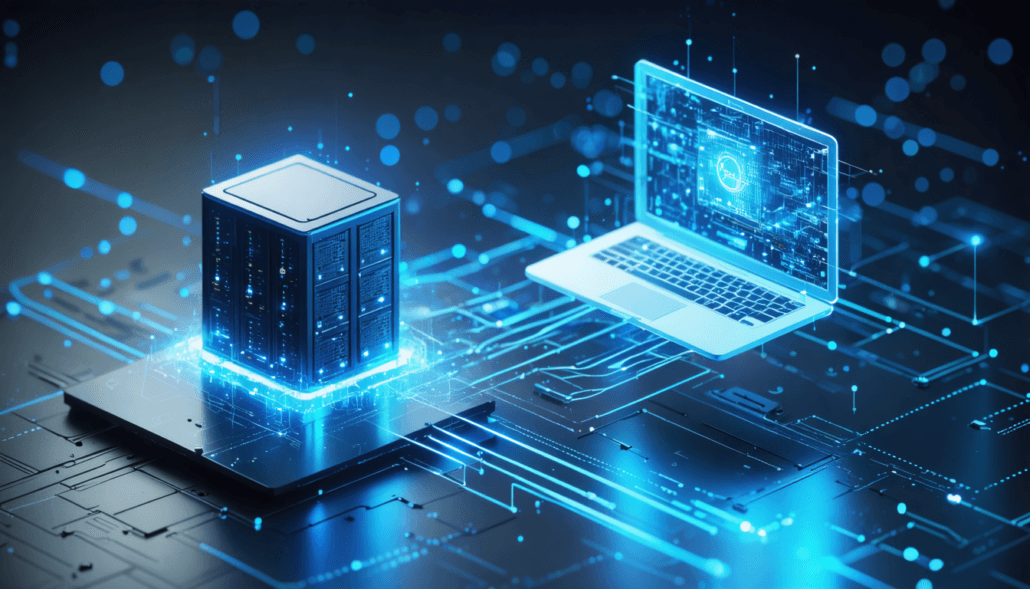
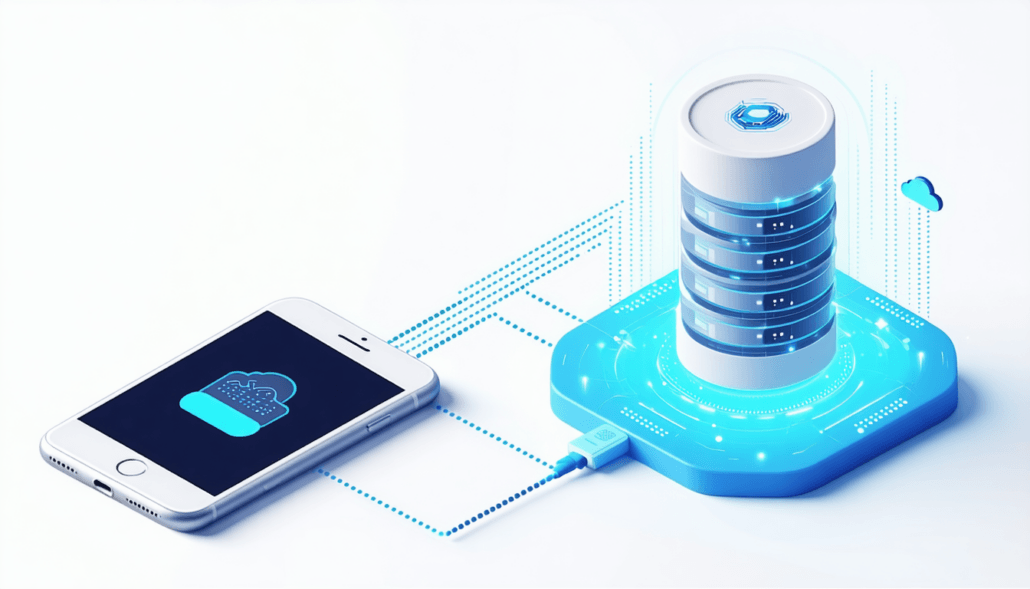
When a device lacks the battery capacity or computational horsepower to run an AI model locally, it offloads the task to the nearest edge node rather than a distant cloud. Edge nodes take the form of local area network (LAN) routers, on-premise industrial gateways, servers locked in a retail store’s back room, or specialized edge networks provided by Content Delivery Networks (CDNs) like Cloudflare. Because these nodes are typically located within the same city—or even the same building—as the user, the data transit time is reduced to mere milliseconds. The rollout of 5G cellular networks has drastically enhanced this layer, allowing mobile devices to offload heavy computations to servers sitting directly at the base of the cell tower.
The Central Cloud Layer
Edge AI does not eliminate the cloud; it refines its purpose. In an edge-optimized architecture, the centralized cloud is reserved for heavy, resource-intensive tasks that do not require real-time execution. This includes training massive, billions-parameter AI models, aggregating anonymized metadata from thousands of edge nodes to discover long-term business trends, and securely archiving historical data. Once the heavy lifting of training is complete in the cloud, the lightweight, optimized models are pushed down to the edge nodes via secure over-the-air updates for execution. The cloud trains the brain, but the edge acts as the reflexes.
The Core Edge AI Benefits Defining Modern Software
The decision to migrate artificial intelligence workloads away from the cloud is typically driven by distinct, highly measurable advantages. These Edge AI benefits provide a compounding return on investment, particularly for organizations deploying software at scale. Understanding these core benefits is essential for any organization looking to modernize its digital infrastructure and outpace its competition.
Ultra-Low Latency for Real-Time Execution
Latency—the time it takes for data to travel from a source to a destination and back—is the ultimate enemy of real-time applications. Even with dedicated fiber-optic connections, a round-trip query to a centralized cloud server typically takes anywhere from 50 to 200 milliseconds depending on network congestion and geographic distance. While this may be acceptable for loading a static image on a blog, it is catastrophic for autonomous robotics, high-frequency algorithmic trading platforms, or augmented reality applications where a delay of even 20 milliseconds can cause a critical failure.
By eliminating the network round-trip entirely, inference times can be reduced to single-digit milliseconds. The intelligence is executed directly on the device’s silicon or the nearest local node. For businesses, this means delivering flawless, instant user experiences. Whether it is a custom mobile application applying real-time language translation or a Python automation system instantly rejecting defective parts on a high-speed assembly line, localized processing ensures that the software reacts at the speed of reality.
Dramatic Reductions in Bandwidth and Cloud Compute Costs
The financial implications of continuous data streaming are often vastly underestimated by organizations transitioning to an automated ecosystem. Cloud computing costs scale linearly with data transmission volume. Bandwidth is incredibly expensive, particularly when dealing with rich media like high-resolution images, multi-channel audio streams, or continuous 4K video.
Consider a mid-sized manufacturing facility operating 50 high-definition inspection cameras, each streaming video to the cloud at 15 megabits per second. Using standard enterprise cloud egress and ingress rates, transmitting and processing this volume of continuous video data can easily cost €15,000 to €20,000 per month.
By leveraging localized processing, the financial burden shifts dramatically. The cameras use onboard models to analyze the video streams locally. Instead of streaming gigabytes of raw video, the devices only transmit simple text payloads when an anomaly is detected. The edge device continuously discards irrelevant frames and only sends metadata to the cloud—such as an alert stating “Defect detected on assembly item #402” alongside a single image frame. This intelligent filtering process can slash continuous data transmission by over 99%, dropping cloud bandwidth costs from a projected €15,000 per month down to less than €150 per month. The return on investment for the localized hardware is realized almost immediately.
Uncompromising Data Privacy and Security Compliance
Data privacy has become a paramount concern for consumers and a strict regulatory requirement for businesses. Compliance with stringent frameworks like the General Data Protection Regulation (GDPR) in Europe requires businesses to rethink how they handle personally identifiable information. Sending raw audio, video, or medical telemetry to a third-party cloud provider inherently expands an organization’s attack surface and heavily complicates legal compliance.+1
Processing data locally fundamentally alters the security paradigm through a concept known as data minimization. If a smart camera in a retail store processes video feeds locally to count foot traffic and immediately deletes the video frames from its volatile memory, no personal visual data ever leaves the physical premises. Only the anonymized output (e.g., “15 people entered the store between 10:00 and 10:15”) is transmitted to the central database. This localized approach mitigates the risk of massive data breaches, protects consumer privacy, and drastically simplifies the legal hurdles of digital surveillance.
Uninterrupted Operations and Offline Reliability
No matter how robust an internet connection might be, network outages, bandwidth throttling, and signal dead zones are inevitable realities. Cloud-dependent software breaks down the moment connectivity is lost. In consumer applications, this is an inconvenience; in industrial, agricultural, or healthcare settings, an internet outage can cause millions of euros in damages or threaten human lives.
Edge-native applications are inherently resilient. An agricultural IoT sensor deployed in a remote field, a tablet used by technicians deep inside a concrete mine, or a point-of-sale system in a busy retail environment must continue functioning autonomously regardless of network status. Localized AI ensures that mission-critical intelligent operations remain fully functional completely offline, syncing their historical logs with the cloud only when connectivity is eventually restored.
High-Impact Business Use Cases Driven by the Edge
The theoretical advantages of decentralized intelligence are impressive, but the practical applications are actively revolutionizing entire industries. Businesses integrating these solutions are achieving massive leaps in operational efficiency, workplace safety, and customer satisfaction. At Tool1.app, we specialize in identifying these exact opportunities for our clients.
Industrial IoT and Predictive Maintenance
In manufacturing and heavy industry, equipment downtime is notoriously expensive, often costing factories up to €10,000 per minute in lost production. Traditional preventative maintenance relies on arbitrary calendar schedules, while reactive maintenance waits for the machine to break.
By deploying vibration sensors, acoustic monitors, and thermal cameras equipped with embedded AI, factories can actively monitor the health of machinery in real time. For example, a localized machine learning model can analyze the acoustic signature of an industrial drill press. By comparing the live sound waves against thousands of hours of training data, the edge device can detect the micro-abrasions of a failing bearing days before it snaps. Because the acoustic data generates megabytes of information per second, sending it to the cloud is impossible. Processing it locally allows the system to instantly halt the machine and alert a technician, saving the facility hundreds of thousands of euros in catastrophic mechanical failure.+1
Smart Retail and Real-Time Visual Analytics
The retail sector is utilizing decentralized computer vision to transform the brick-and-mortar experience. Modern supermarkets utilize smart shopping carts and ceiling-mounted cameras equipped with localized AI to power checkout-free experiences. As a customer places an item in their cart, the localized model immediately recognizes the product packaging and updates the digital receipt.
Furthermore, digital signage and smart kiosks can adapt to the demographics of the user standing in front of them in real-time. By utilizing lightweight facial analysis on the local kiosk hardware, the display can swap its advertising content to match the general age demographic and focus of the consumer. Because the edge device instantly discards the video frame and only registers the demographic metadata, it adheres strictly to privacy guidelines while significantly increasing marketing engagement rates.
Healthcare and Wearable Diagnostics
Nowhere is the combination of latency and privacy more critical than in healthcare. Modern wearable devices, such as smartwatches, utilize highly specialized microprocessors to run localized AI models capable of monitoring heart rate variability, detecting atrial fibrillation, or predicting falls.
If a patient wearing a biometric monitor experiences a severe cardiac event, the device cannot rely on an active internet connection to evaluate the ECG data. The localized AI instantly identifies the arrhythmia and can trigger an emergency broadcast from a paired smartphone. This localized processing guarantees life-saving latency while ensuring that highly sensitive medical telemetry is kept entirely on the patient’s personal device, perfectly aligning with global medical data compliance standards.
Next-Generation Web Applications via Edge Networks
Edge computing is not limited to hardware sensors and physical IoT devices; it is revolutionizing how we build custom websites and enterprise web applications. Traditional Content Delivery Networks (CDNs) were designed to cache static assets like images and CSS files close to the user. Today, edge networks like Cloudflare Workers and Vercel allow developers to deploy serverless backend code and even machine learning models directly at the CDN level.+2
When building custom websites at Tool1.app, we frequently leverage network edge deployment to deliver hyper-personalized user interfaces. Instead of routing a user’s web request back to a central server in a different country, we can intercept the request at an edge node in their home city. We can run a lightweight machine learning model at that edge node to inject personalized product recommendations or translate text instantly before the HTML is served to the browser. This results in incredibly fast, dynamic web applications that feel instantaneously responsive to the user.
Technical Implementation: Building an Edge AI Pipeline
Transitioning from a centralized cloud architecture to an edge-first approach requires a shift in how developers build, train, and deploy machine learning models. Cloud AI models are often massive, requiring gigabytes of RAM and powerful server GPUs. In contrast, edge models must be lean, highly optimized, and capable of running on severely constrained hardware.+1
Model Optimization and Compression Techniques
You cannot simply take a massive deep Convolutional Neural Network and drop it onto a €40 microcomputer. The model must be mathematically shrunk through specific optimization techniques:
- Quantization: In a standard machine learning model, the mathematical weights connecting the neural network are typically stored as 32-bit floating-point numbers. Quantization mathematically maps these highly precise numbers to lower-precision 8-bit integers. By converting 32-bit floats to 8-bit integers, the model’s memory footprint is reduced by roughly 75&percent;. Furthermore, integer math requires significantly less computational power than floating-point math, meaning the model runs faster and consumes far less battery power on a mobile device, with only a negligible drop in predictive accuracy.
- Network Pruning: During the training phase of a neural network, many connections between artificial neurons end up having little to no impact on the final decision. Pruning systematically identifies and mathematically removes these redundant, “zero-weight” connections. By snipping these weak connections, developers create a sparser, lighter model that is ideal for rapid edge execution.
- Knowledge Distillation: This technique involves using a massive, highly accurate “Teacher” model running in the cloud to train a much smaller, lightweight “Student” model designed for the edge. The student model learns to mimic the exact outputs of the teacher, allowing a model that is a fraction of the size to punch far above its weight class in terms of analytical capability.
Code Example: Edge Inference with Python and ONNX
Python automations play a massive role in orchestrating edge deployments. To demonstrate the practical value of local execution, let us examine a simplified conceptual example of how one might deploy a computer vision model on a local IoT gateway using Python and the ONNX (Open Neural Network Exchange) Runtime, which is highly optimized for fast inference on edge CPUs.
Python
import cv2
import onnxruntime as ort
import numpy as np
import time

# 1. Initialize the highly optimized ONNX model on the local edge device
# This model was previously trained in the cloud and quantized to INT8
edge_session = ort.InferenceSession("industrial_defect_model_quantized.onnx")

# 2. Open a connection to the local USB camera or IP stream
camera = cv2.VideoCapture(0)

print("Starting Edge AI real-time inspection pipeline...")

while True:
    # 3. Capture frame-by-frame from the local hardware
    ret, frame = camera.read()
    if not ret:
        break

    # 4. Preprocess the image: resize and normalize for the neural network
    img = cv2.resize(frame, (224, 224))
    img_data = np.array(img).astype('float32') / 255.0

    # Restructure array to match model input requirements (Batch, Channels, Height, Width)
    img_data = np.transpose(img_data, (2, 0, 1))
    img_data = np.expand_dims(img_data, axis=0)

    # Start timer to measure strictly local edge latency
    start_time = time.time()

    # 5. Run inference LOCALLY on the edge node - zero internet connectivity required
    input_name = edge_session.get_inputs()[0].name
    predictions = edge_session.run(None, {input_name: img_data})

    # Calculate exact execution time
    latency = (time.time() - start_time) * 1000  # Convert to milliseconds

    # 6. Execute business logic based on local prediction
    confidence_score = predictions[0][0][1]

    if confidence_score > 0.85:
        print(f"CRITICAL DEFECT DETECTED! Local Latency: {latency:.2f} ms")
        # In a real environment, this triggers a local mechanical arm instantly
        # trigger_rejection_mechanism()
    else:
        # Product is flawless. Do nothing. No raw data is ever sent to the cloud.
        pass

    # Sleep briefly before the next frame
    time.sleep(0.05)

camera.release()
Notice the sheer power of this Python automation. The entire decision-making process—capturing the high-definition image, analyzing it via a neural network, and deciding to reject a defective product—happens entirely within the local hardware scope. The latency is measured in mere milliseconds, allowing factory machinery to operate at maximum physical speed without ever waiting for a cloud API response.
Deploying AI on Edge Networks: Cloudflare Workers
For custom websites and scalable web applications, we can push AI directly to the network’s periphery. Imagine an e-commerce platform that wants to automatically perform sentiment analysis on user reviews before they are saved to the primary database. Instead of hitting the core API and slowing down the main backend, an edge function intercepts the request geographically close to the user.
JavaScript
// A conceptual Cloudflare Worker script executing AI at the network edge
export default {
  async fetch(request, env) {
    // 1. Intercept the text to analyze from the incoming user request
    const url = new URL(request.url);
    const userReviewText = url.searchParams.get("text") || "This product is fantastic!";

    // 2. Call the AI model directly on the localized Edge Node
    // This executes in the same regional data center the user is connecting to
    const sentimentResponse = await env.AI.run('@cf/huggingface/distilbert-sentiment', {
      text: userReviewText
    });

    // 3. Make an instantaneous routing decision based on the Edge AI
    if (sentimentResponse.label === 'NEGATIVE' && sentimentResponse.score > 0.9) {
        // Automatically route highly negative reviews to a priority customer support queue
        return new Response(JSON.stringify({
          status: "flagged_for_support",
          message: "We are sorry you had a bad experience. Support will contact you."
        }), { headers: { "Content-Type": "application/json" } });
    }

    // 4. Return the standard processed text to the user instantly
    return new Response(JSON.stringify(sentimentResponse), {
      headers: { "Content-Type": "application/json" }
    });
  }
};
This snippet demonstrates the elegance of network-edge AI. The execution environment boots up in zero milliseconds, processes the user request locally, and spins down instantly, charging the business only for the exact computational milliseconds used.
Overcoming Challenges in Edge Machine Learning Orchestration
Despite its vast potential, transitioning to an edge architecture is not without its hurdles. Decentralizing intelligence introduces new complexities in system management, security, and lifecycle operations that must be addressed professionally.
MLOps and Distributed Fleet Management
In a centralized cloud environment, updating an AI model is straightforward: you deploy the new code to a single, highly controlled cluster of servers. In an edge computing paradigm, updating an AI model might mean securely pushing a new, 50-megabyte neural network file to 10,000 distinct IoT devices scattered across a continent. Maintaining version control, ensuring smooth over-the-air (OTA) updates, and monitoring the health of a decentralized fleet requires rigorous Machine Learning Operations (MLOps) infrastructure. If a deployment fails on a remote device due to a spotty network connection, automated rollback protocols must be perfectly tuned to prevent system failure.
Hardware Fragmentation
An AI model trained in the cloud must be specifically compiled and optimized to run on vastly different architectures, such as an Apple Neural Engine, a Qualcomm processor, an Nvidia Jetson Nano, or a Google Coral Edge TPU. Each of these hardware targets requires a nuanced understanding of low-level software engineering and compiler optimization.
Physical Security and Zero-Trust Architectures
Cloud servers are locked inside heavily guarded data centers with biometric access controls and armed security. Edge devices, however, are often physically exposed in public spaces, busy retail stores, or remote factories. This makes them vulnerable to physical tampering, theft, or local network breaches. Securing an edge device requires robust hardware-level encryption, secure boot protocols to prevent malicious software from loading, and strict zero-trust network architectures to ensure that a compromised edge node cannot be used as a backdoor into the enterprise’s broader internal network.+1
Navigating these complex deployment hurdles is precisely where partnering with an experienced software development agency becomes indispensable. At Tool1.app, we handle the complexities of model quantization, hardware targeting, and secure orchestration so that our clients can focus entirely on their core business objectives.
The Future: Bringing Large Language Models to the Edge
We are currently witnessing the beginning of an entirely new frontier: the deployment of Generative AI and Large Language Models (LLMs) locally. Until recently, the massive compute requirements of LLMs restricted their use strictly to massive cloud data centers. This presented significant privacy concerns for corporations; many businesses strictly forbid employees from pasting proprietary code, legal contracts, or sensitive financial data into public cloud LLMs due to data leakage risks.
However, the open-source community has aggressively focused on creating Small Language Models (SLMs). Models with 3 billion to 8 billion parameters are now being highly quantized to run natively on consumer laptops, premium smartphones, and local enterprise servers completely offline.
This capability fundamentally changes enterprise software. A law firm, for example, can invest roughly €5,000 in a robust local edge server equipped with mid-range GPUs. By running a localized, highly optimized Small Language Model, lawyers can securely upload and summarize thousands of confidential legal documents using localized Retrieval-Augmented Generation (RAG). The proprietary documents are never uploaded to an external AI provider, completely negating the risk of corporate espionage or data leakage. Furthermore, the firm saves thousands of euros annually by avoiding token-based API usage fees from central cloud providers.
Conclusion: The Decentralized Future of Software Architecture
The era of defaulting to centralized cloud processing for every computational task is rapidly coming to an end. As businesses face exponential data growth, the rigid physical limitations of network bandwidth, the demand for immediate responsiveness, and the strict requirements of global privacy regulations, adopting a localized computing strategy is no longer optional—it is a competitive necessity. The compelling Edge AI benefits we have explored, from slashing operational cloud costs and eliminating network latency to enabling robust offline functionalities, provide a clear blueprint for the next generation of digital infrastructure.
Transitioning from legacy cloud models to sophisticated edge architectures requires expert engineering, precise model optimization, and seamless hardware-software integration. Whether you are looking to deploy intelligent Python automations on factory hardware, build ultra-fast custom web applications optimized through Cloudflare Workers, or integrate advanced localized LLMs into your existing business operations, the engineering team at Tool1.app is ready to guide your digital transformation. By treating the edge as a core extension of your architecture rather than an afterthought, we create software solutions that are genuinely intelligent, highly responsive, and meticulously secure.
Speed up your application. Let’s build on the Edge.
Stop letting latency, poor connectivity, and exorbitant cloud storage costs dictate your company’s potential. Speed up your application. Let’s build on the Edge. Contact Tool1.app today to schedule a comprehensive technical consultation with our experts, and discover how our custom software development and localized AI automation services can drive unprecedented operational efficiency and innovation within your enterprise.